
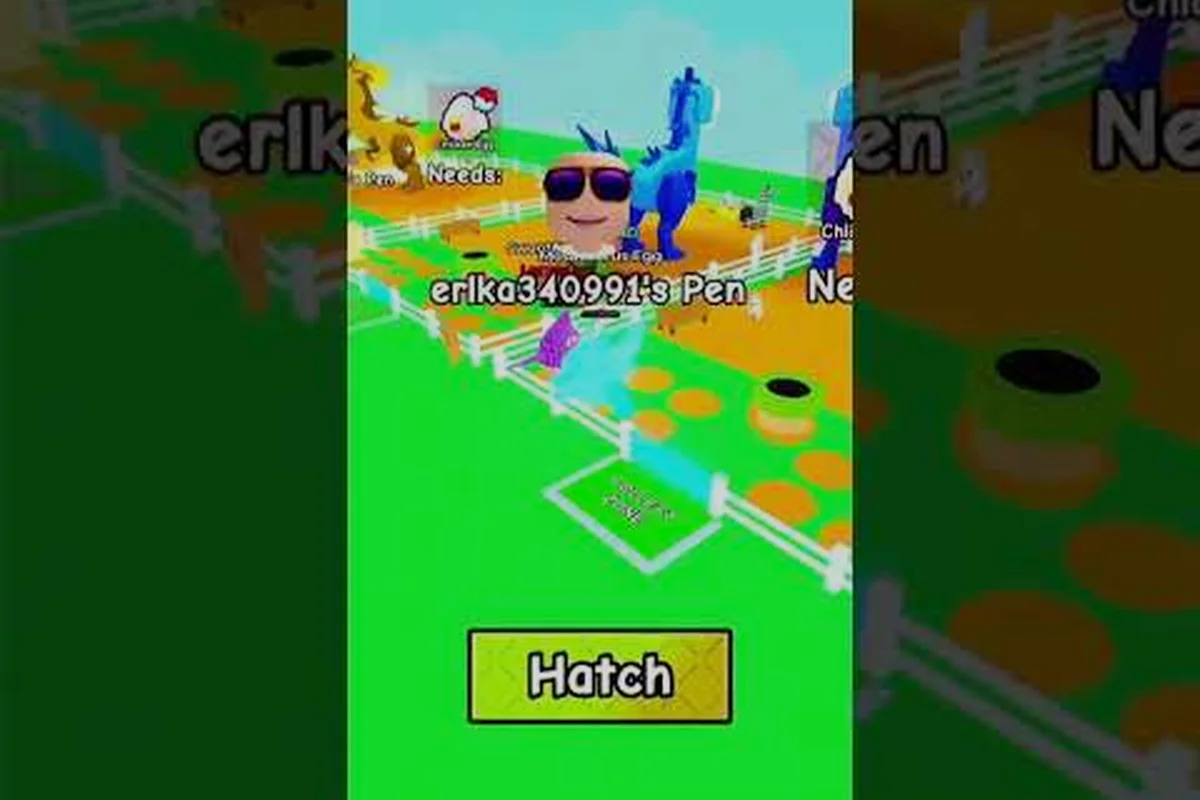
Finding eggs in Fake an Egg depends on knowing which areas are active, when other players are moving through them, and which spots still offer a safe place to hatch. The best locations include pet homes, garden spots, the central area, and the main lobby, but each area has a different risk and reward.
Where to Find Eggs in Fake an Egg
The quickest way to improve your chances is to rotate through several egg locations instead of camping one corner. Eggs can appear in ordinary rooms, outdoor garden areas, and busy transition spaces, so the answer to Fake an Egg where to find eggs depends on the current match and the route other players take.
Start with the Main Lobby, scan nearby buildings, and then move toward the Central Area. These zones are easy to reach and usually provide multiple nearby targets, although their popularity also makes them less private. If the lobby is crowded, the surrounding Pet Homes can offer more room to maneuver.
| Priority | Egg-search area | Main advantage | Main drawback |
|---|---|---|---|
| 1 | Main lobby | Several immediate routes and visible landmarks | Many players pass through |
| 2 | Central area | Nearby buildings and outdoor approaches | Common interception route |
| 3 | Pet homes | Multiple indoor checks and useful cover | Players can watch entrances |
| 4 | Garden spots | Less predictable hiding and useful side paths | Eggs may be farther apart |
| 5 | Connected side buildings | Often less crowded than central landmarks | Requires longer searching |
This order is a practical starting point rather than a guaranteed spawn list. Spawn availability is match-dependent, and reported player locations can change whenever the game receives a Fake an Egg map update. For example, if the Main Lobby is crowded, checking the Central area and then circling the Pet Homes can reduce the time spent revisiting popular rooms, while Garden spots may offer better concealment but require more travel. Use the priority table as a rotation: check one route, move on after a short search, and revisit only if another player’s report suggests an egg may still be nearby.
Begin with a short location sweep
Spend the first moments of a run moving through visible structures rather than watching one doorway. Look for egg prompts, movement inside houses, and players carrying or protecting an egg. A 10–15 second sweep can reveal whether the immediate lobby is productive enough to justify another pass.
If no eggs appear nearby, expand the route rather than wasting time in an empty room. Efficient players often follow a loop: lobby, nearby home, garden edge, central corridor, and back toward the lobby. This method reduces travel because every detour returns you to a known landmark.
For a broader view of productive routes, compare the available areas in the new-areas overview. The same route can also change as developers add spaces, so players should treat every map guide as a baseline rather than an unchanging layout.
Pet Homes and Garden Spots Compared
Pet Homes are valuable because players often enter them looking for pets, eggs, or safer indoor routes. Doors, furniture, and room dividers interrupt sightlines, which can make them better for maneuvering than a wide-open plaza. They are not automatically safe, though, because a player waiting near an entrance can predict where you will emerge.
Garden Spots offer a different advantage: their paths, planting areas, and hedges create several possible approaches. A player who reaches a garden from one direction may miss an egg on the opposite side, giving a patient searcher an edge. The drawback is that outdoor spaces often demand more travel, and easy-to-reach eggs may already have been taken.
| Factor | Pet homes | Garden spots |
|---|---|---|
| Typical layout | Compact indoor rooms and doorways | Open paths, plants, and divided outdoor areas |
| Best search method | Check corners, then watch the exit | Circle the perimeter, then inspect the center |
| Stealth benefit | Interior objects can block sightlines | Plants and uneven routes reduce predictable movement |
| Stealth risk | Entrances can be camped | Wide sightlines can expose your approach |
| Best use | Quick indoor checks and pet-related encounters | Wider searches and less obvious movement |
| Likely competition | Moderate to high | Moderate, depending on the route |
Best time to search each type
Enter a Pet Home when the preceding lobby area is quiet but the home is still receiving traffic. A short pause near the door can reveal whether anyone is waiting inside, although you should not remain in one entrance if other players are gathering outside. Move through connected rooms instead of scanning everything from the threshold.
Search Garden Spots from the less popular side when possible. Start at the edge, work toward the central planting area, and check the spaces behind hedges before returning to a main path. This creates a layered search pattern and can catch eggs that a straight walk through the garden would miss.
Community experience consistently favors rotation over camping, although egg density still varies by match. Treat the first two checks as a relocation threshold, not evidence that a Pet Home or Garden Spot is permanently empty. If both locations produce no egg, moving on prevents a wasted minute and preserves time for a more productive central area, main lobby, or connected route. The key is comparing successive checks: one empty search may reflect a low-density spawn window, while two in a row usually makes another pass less efficient than trying a new location.
When to use pets during a search
Pets can be useful for changing your movement and making a route less predictable, but they are not a substitute for scouting. A pet may help when a garden or lobby route feels exposed, especially if you are trying to cross a central area without drawing attention.
The hatching and pet-stealing guide explains the broader role of pets and eggs in the game loop. For location searches, keep your priority on entrances, corners, and route changes, because those details determine whether you can pass through safely.
Central Area and Main Lobby Egg Routes
The Central Area and the Main Lobby are the easiest landmarks to revisit, but they are also the areas where players are most likely to cross paths. A good route uses these busy zones as connection points rather than treating either one as a guaranteed hunting ground.
Start in the Fake an Egg main lobby, identify the nearest doorways, and check any building that intersects the main path. The lobby is useful for orientation because several routes begin there, and player traffic can signal which direction is active. If many players are moving toward one exit, that area may be occupied, while the opposite path may offer a better search.
| Route | Starting point | Search order | Best reason |
|---|---|---|---|
| Lobby loop | Main lobby | Side home, garden edge, central return | Easy to repeat and connects several areas |
| Central sweep | Central area | Near buildings, perimeter path, adjacent lobby | Finds eggs near a recognizable landmark |
| Reverse loop | Pet home | Garden, central corridor, main lobby | Avoids repeating the most obvious opening |
| Wide search | Lobby | Two pet homes, one garden, central area | Better when nearby rooms appear empty |
Use traffic to decide the next check
Watch where players run rather than only what they carry. Several players moving toward the Central Area may indicate competition around a popular building, while an empty garden could be a safer place to start a search. This does not guarantee an egg, but it gives you a practical reason to change direction.
A useful rule is to follow a player group for only a few seconds, then break away toward a connected area such as a garden spot or pet home. For example, if several players rush toward the Central Area from the Main Lobby, crossing into a quieter nearby room can put you closer to a hidden egg and avoid the crowded route where eggs are likely to be claimed first.
For exact zone requirements and route planning, consult the teleport and biome guide. The Fake an Egg central area is most useful as a junction because it can lead toward several distinct searches, so position matters more than spending the entire match in one room.
Keep a mental escape line
Before entering a busy building, identify two exits. If one becomes blocked, use the other instead of reversing immediately through the same doorway. This is especially important in the main lobby, where a narrow entrance can become a bottleneck when several players converge.
Good escape lines also make egg searches less stressful. You do not need to win every confrontation; your objective is to find an egg, secure it, and leave with room to hatch. When a location begins to feel trapped, preserve your exit and move toward a pet home or garden path.
Where to Hatch Eggs Safely After Finding One
Finding an egg is only half the objective. The location where you open it determines whether you can complete the hatch before another player interferes. Use Fake an Egg where to hatch information to separate the search, escape, and opening stages instead of trying to hatch immediately where the egg appears.
Look for a room with more than one entrance, limited open floor space, or a partition that blocks the direct approach. A safe hatch corner should let you see the main doorway while keeping your body out of its direct line. If the egg is exposed in the middle of a plaza, move it only when you have a clear path and can outrun nearby players.
| Hatch condition | Practical result | Action to take |
|---|---|---|
| Two usable exits | Easier interruption recovery | Keep one exit open |
| Cover between you and the door | Better protection from direct approach | Hatch while watching the entrance |
| Several players nearby | High risk of losing the egg | Delay or relocate |
| Completely open floor | Few hiding angles | Find an interior room first |
| Unfamiliar pet home | Unpredictable exits and occupants | Scout before committing |
| Quiet garden edge | Useful if routes remain open | Check nearby paths before hatching |
Separate the egg from the crowd
Do not assume that hiding with an egg is enough. Move away from the densest group, use a change in elevation or direction, and avoid repeatedly crossing the same path. Other players can notice repeated routes even when they cannot see the egg directly.
A common mistake is to search an entire map and then hatch in the first safe-looking corner. By that point, more players have entered the area. If the route becomes crowded, keep moving toward a different connected section instead of forcing a risky opening.
Learn the opening step
Practice the hatch sequence in a safe environment so you know which action starts the process and how long it takes. The step-by-step egg hatching guide provides the relevant preparation. Players who delay because they are unsure of the input often create a much larger risk than players who open the egg in a less perfect location.
The best location balances three factors: distance from competitors, control of the approach, and access to an escape route. In the Fake an Egg pet homes, a side room can be safer than the main lobby if its doorway limits how many incoming players can pressure the hatch. In garden spots, check line-of-sight before committing: an exposed lawn may offer an escape route, but a narrow path or corner is easier to defend. Treat the central area as high risk unless you can confirm it is clear, and account for map updates, which may change the fastest route or temporarily block an exit. If one side improves while another collapses, the area is usually not worth using.
Practical Egg Search Checklist
Consistency comes from a repeatable search routine, not from memorizing a single guaranteed egg coordinate. Use the following checklist each time you enter a match and adapt it when the current Fake an Egg map update changes the available routes.
Before entering a location
-
Identify whether the area is indoors, outdoors, or a transition zone.
-
Listen for activity around the entrance and note obvious player traffic.
-
Check whether you have a nearby alternate exit before entering.
-
Decide which nearby location you will try if the first search is empty.
-
Avoid starting a long detour without remembering the route back to a landmark.
| Search stage | Action | Why it helps |
|---|---|---|
| Orientation | Check the main lobby routes | Establishes where player traffic is moving |
| First sweep | Inspect nearby pet homes | Covers compact spaces efficiently |
| Expansion | Check connected garden spots | Finds less predictable egg positions |
| Midpoint | Cross the central area | Reaches multiple paths and landmarks |
| Return | Revisit one empty location | Catches eggs that appeared after the first pass |
| Extraction | Carry the egg toward a hatch point | Prevents the search from turning into a prolonged exposure |
Use a second pass only when the area supports it
A second pass is sensible when the location has multiple rooms, clear sightlines, and no sign that players are waiting nearby. It is wasteful in a tiny room with one exit because someone else can control the entire approach. Value per room is a better measure of where to search than raw distance.
Community reports suggest that repeated checks can still produce results because eggs and players shift during a match, although no specific timing window is consistently verified. For example, a hidden egg near a main lobby entrance may be empty on one pass while a player, another egg, or a movable obstruction changes the route before the next check. Treat those observations as community data, not a guaranteed spawn rule. When a location is worth revisiting, compare the current sightline, nearby rooms, and player activity against the first pass, then prioritize changes that affect access rather than relying on a fixed egg respawn timer.
Leave before the situation becomes a trap
Every location should have an exit condition. Leave if the doors become blocked, if multiple players converge, or if your route back is no longer clear. This matters because an egg is less valuable when carrying it makes you vulnerable.
The overall goal is simple: keep moving through Fake an Egg pet homes, garden spots, the central area, and the main lobby, then use the quietest viable room to hatch. That route gathers several useful search patterns without assuming that every egg spawns in the same place.
Rare Egg and Map Update Considerations
Once you have found a reliable route, the next question is whether the egg is worth the risk. Egg value affects how long you should protect a find, while map changes affect where you should search at all. Understanding both prevents a strong egg from being lost during a careless escape.
Use the egg value and rarity guide to compare potential rewards before choosing a target. If two players are contesting an ordinary egg, a high-value egg may justify a safer detour. If the available egg has little value, avoiding the confrontation is often the stronger decision.
| Situation | Better decision | Reason |
|---|---|---|
| Valuable egg in a crowded room | Relocate before opening | Preserves the reward |
| Ordinary egg with an immediate threat | Abandon the contest | Limits losses |
| Quiet pet home with two exits | Hatch immediately | The location supports a controlled opening |
| Garden egg near an exposed path | Move toward a home | Reduces interception risk |
| New map area | Test briefly, then rotate | Avoids assuming old routes still work |
| Repeated empty searches | Shift to another biome route | Search quality may be declining |
Keep a post-update test routine
After a Fake an Egg map update, confirm the basic landmarks before committing to a long route. Check whether the main lobby still connects to the same central paths, whether garden entrances have shifted, and whether pet homes now offer a different number of exits. Even a small layout change can invalidate a previously reliable loop.
New areas are also worth comparing against the current new-areas overview. Test a new location with a short route rather than spending an entire match there, and compare its egg availability with established pet homes and garden spots.
Prioritize the reward, not the confrontation
A rare find can make a player bolder than the situation supports. Keep the egg moving, avoid isolated shortcuts, and use the safer hatch room even if it requires more travel. Reward retention is the practical measure of a successful search.
Frequently Asked Questions
Where are the best spots to find eggs in Fake an Egg?
The best spots are usually pet homes, garden spots, the central area, and the main lobby because they combine several search routes. Start with nearby pet homes for quick checks, rotate through garden edges, and use the main lobby as a central checkpoint. Availability changes by match, so a complete sweep is more reliable than camping one location.
Are pet homes safer than gardens for finding eggs?
Pet homes provide better cover because walls, furniture, and doorways break sightlines, but entrances can be watched. Gardens offer multiple approaches and natural hiding points, although wider paths can expose you. Choose a pet home for quick indoor searches and a garden when you want a less predictable route around approaching players.
Can I hatch an egg immediately after finding it?
Not always. Moving to a hatch location can be safer if the first area is crowded or has only one exit. Find a room with two entrances, enough cover, and a clear escape path, then begin the opening process. If the egg is already in a safe position, delaying may simply give more players time to arrive.
What should I do after a Fake an Egg map update?
Revisit the main lobby and central area first, then test each pet home entrance and garden route. Compare the new layout with your old routine, because a shifted door or altered path can expose a previously reliable approach. After confirming the connections, rotate between familiar and new areas instead of investing the whole match in one route.
Does the main lobby reliably contain eggs?
The main lobby is a good search checkpoint because several routes begin or pass nearby, but it is not a guaranteed egg location. Its high traffic can also make theft and interception more likely. Use it to orient yourself, check nearby buildings, and identify movement patterns, then move toward quieter pet homes or garden spots when necessary.